Price Impact vs. Slippage
Last updated: November 24, 2026
Price Impact and Slippage are two reasons you might receive slightly less than expected when making a bridge or swap transaction on Relay.

Price Impact | Slippage | |
What it is | The gap between the general market price and the price Relay quotes for your specific trade. | Price movement that happens AFTER you get the quote, while the transaction settles. |
What causes it | It includes Execution Cost, Swap Cost, and Platform Fees. | Caused by market movement between quote time and execution time. |
Already in your quote? | Yes, baked into the quoted amount you see. | No. It happens after you confirm, during execution (usually seconds), and cannot be predicted. |
How to reduce it | Choose a smaller trade size. | Limit how much you'll accept by lowering Max Slippage (this may cause your transaction to fail and be refunded). Smaller trades and more liquid pairs also move less. |
Price Impact: known before you confirm
Price Impact shown in the Relay widget is the difference between the general market price and the price Relay quotes for your specific trade. It’s calculated at quote time, already built into the amount you see before you confirm, and is never charged separately afterward.
It reflects the details of your trade: the route Relay takes, available liquidity, network (execution) costs, and Relay’s fee. More details: https://docs.relay.link/references/api/api_core_concepts/fees#relay-fees
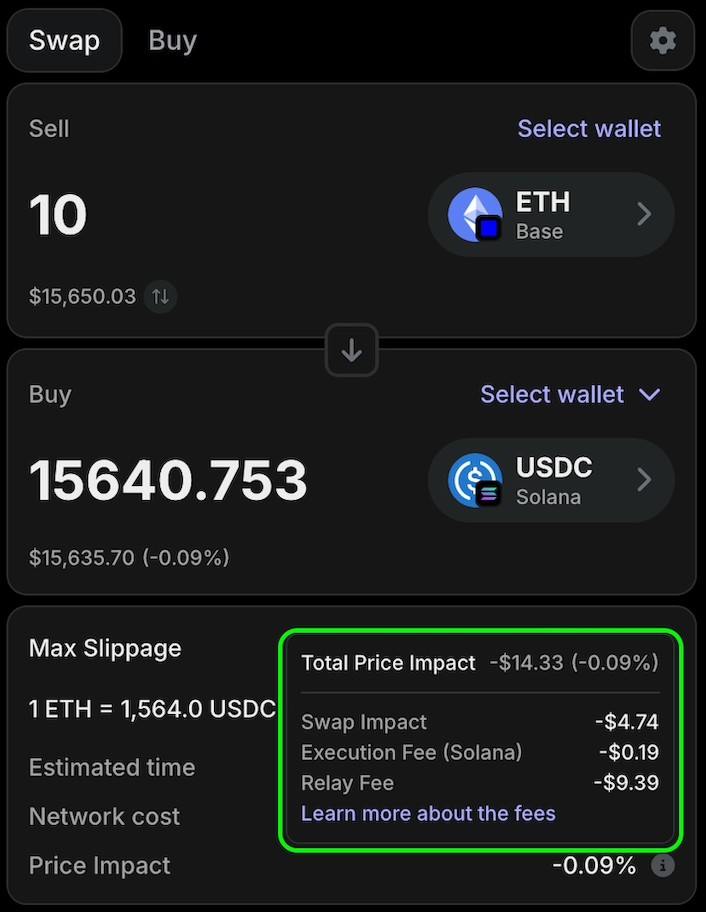
Example:
Market price: 1 ETH = 1,500 USDC
Your Relay quoted price: 1 ETH = 1,498 USDC
That small difference is the price impact.
Larger trades and lower-liquidity tokens tend to have greater Price Impact; smaller trades and same-asset bridges typically have less.
Where can I find Price Impact?
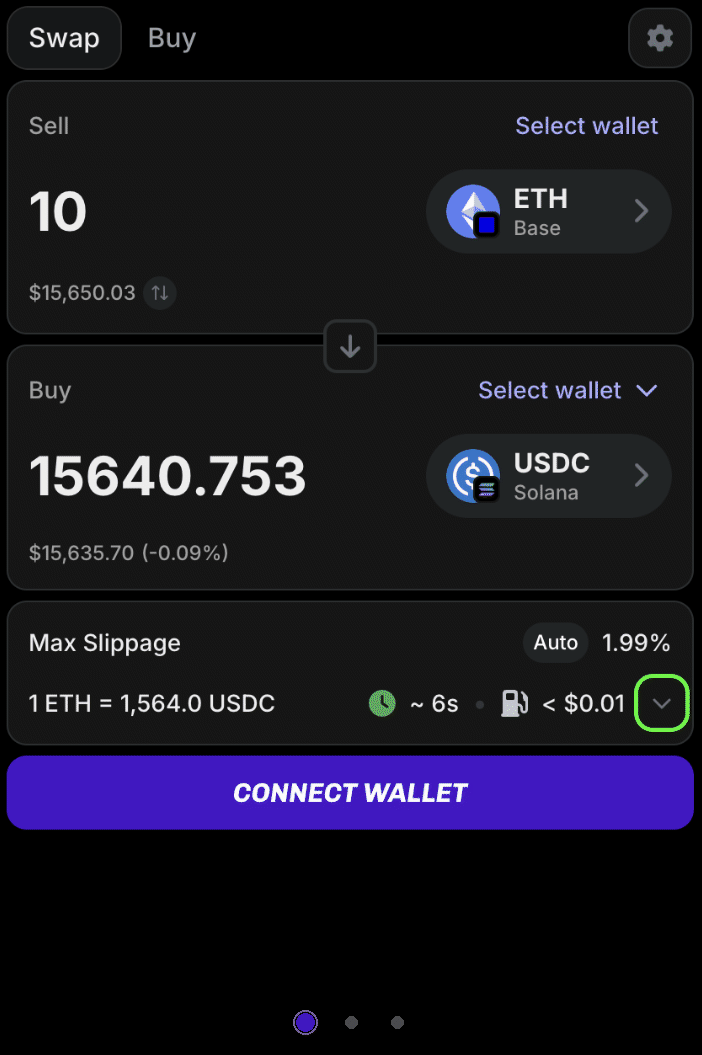
You can find this figure by expanding the collapsed column at the bottom of the widget.
Slippage: movement after you confirm
Slippage is the price movement that occurs after your quote is generated but before the transaction settles. Because markets can move in those few seconds, the final amount may differ slightly from the quote. More details: https://docs.relay.link/references/api/api_core_concepts/surplus-and-shortage
Since market movements can’t be predicted, Relay uses Max Slippage to help ensure you receive an acceptable amount.
What is Max Slippage
The Max Slippage setting is set to "Auto" by default. It is your protection setting and doesn’t mean that up to this % will be taken due to the market movement. It sets the minimum amount you’re willing to accept for this trade. You can view your minimum received amount by hovering over the Max Slippage %.
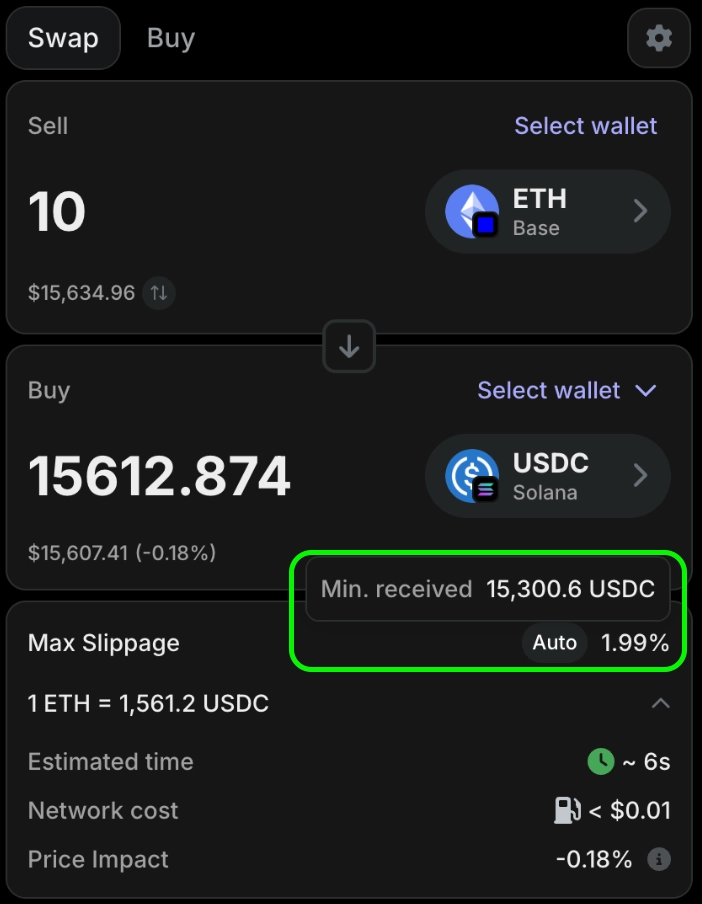
Example:
Market value: 1 ETH = 1,500 USDC
Your Relay quoted amount: 1 ETH = 1,498 USDC
Your Max Slippage setting: 2%
Your minimum received amount: 1,498 USDC x (1 - 2%) = 1,468.04 USDC
The trade completes as long as you receive at least 1,468.04 USDC. If the price moves far enough that the final amount falls below your Max Slippage, the transaction fails, and your wallet is refunded. More details: https://docs.relay.link/references/api/api_core_concepts/refunds#refund-amounts-and-costs
If the price moves in your favor, you may receive more than the quoted price.
Adjust the Max Slippage
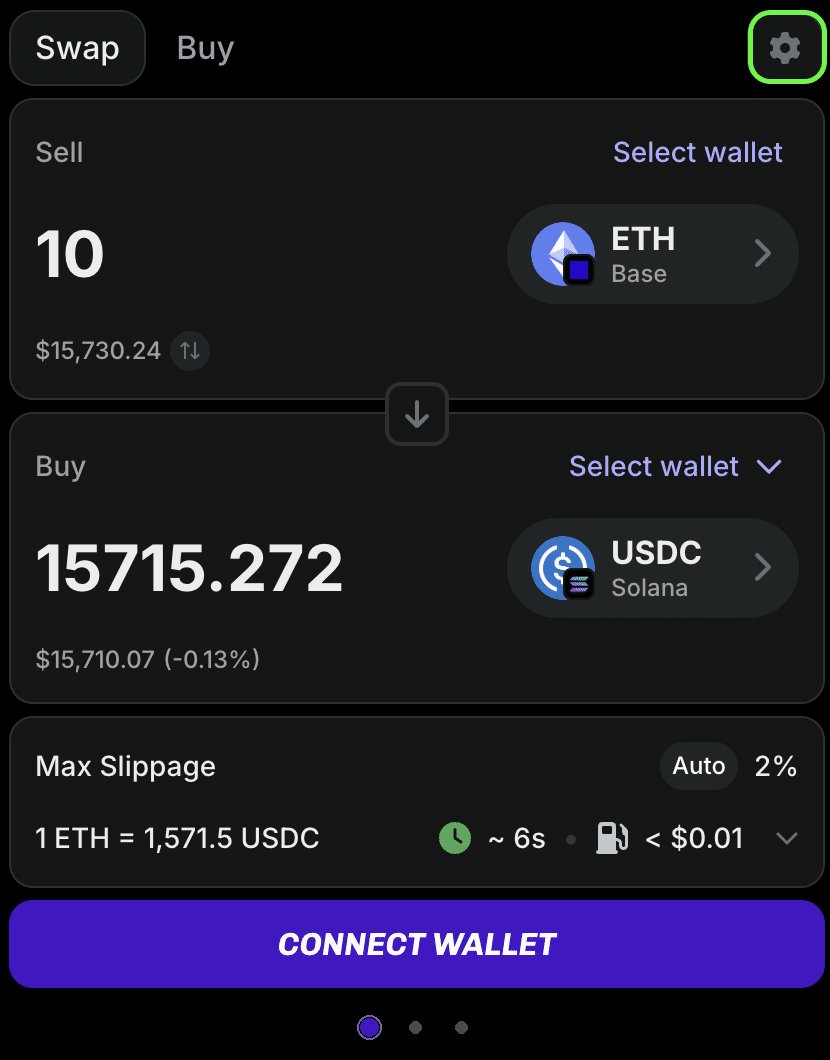
Your Max Slippage setting is set to "Auto" by default. To adjust it, click the gear icon in the top-right corner of the Relay widget → Custom → enter your preferred slippage %.
Note: The default ‘Auto’ setting balances two goals: protecting you from a bad price and preventing your transaction from failing unnecessarily. Setting it too high can cause you to fill at a worse rate; setting it too low can cause transactions to fail.
FAQ
Q: Why did I receive less than quoted, and was I charged for slippage?
You might receive less than quoted due to slippage. However, slippage isn’t a fee, and Relay doesn’t charge you for it. The small difference between the quoted amount and the amount you ultimately receive is due to market movements that occur after you get the quote and while the transaction is being processed.